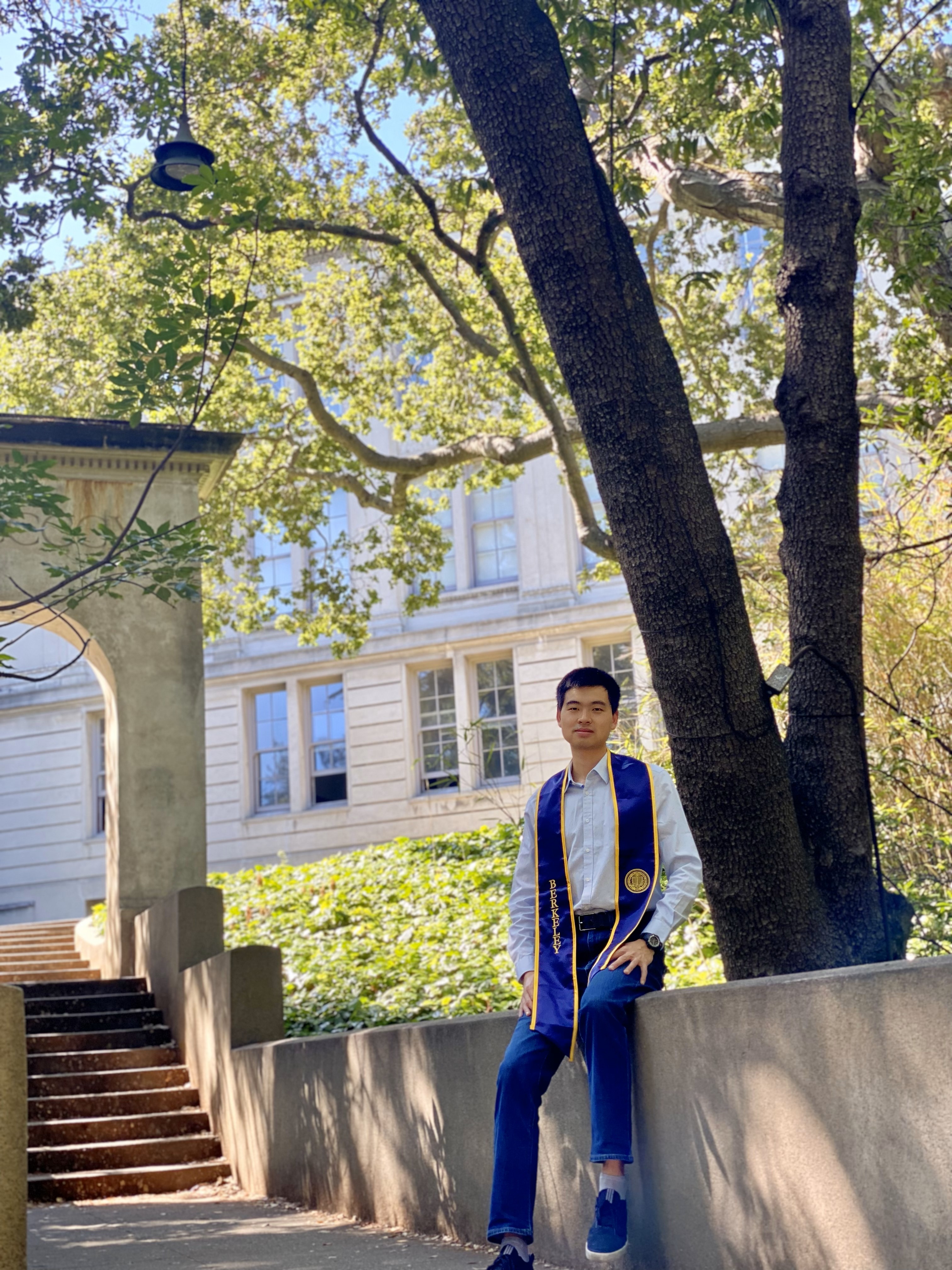
- Austin, TX
- xyaoaf<at>utexas<dot>edu
- Github
- Google Scholar
- ORCID
 X
X
About Me
I am a PhD student at the Department of Geography and the Environment at The University of Texas at Austin. I work in the GISense Lab and I am advised by Professor Yuhao Kang. My research develops data-driven and GeoAI-powered approaches to understand how the built and natural environment evolve and interact. I integrate multimodal geospatial data, including satellite and aerial imagery, LiDAR, street-level imagery, and human mobility datasets, with computational modeling to analyze environmental processes, assess ecosystem services, and uncover the dynamics of human–environment interactions.
My work aims to build scalable, interpretable tools that support climate resilience, urban sustainability, and equitable environmental planning across heterogeneous and rapidly changing landscapes.
I received my Master’s degree in Environmental Planning at University of California, Berkeley, supervised by Professor Iryna Dronova. I received my BSc degree from The Hong Kong University of Science and Technology.
Education
University of Texas, Austin
PhD student, Geography and the Environment, 2025 - present
GISense Lab: link
University of California, Berkeley
MLA, Environmental Planning, 2021 - 2023
Thesis: Towards more effective urban vegetation monitoring and management: Studying of urban tree characteristics and their relationship to the urban heat island effect with high-resolution remote sensing products, a case study in Portland, Oregon, USA
Hong Kong University of Science and Technology (HKUST)
BSc, Environmental Management and Technology, 2017 - 2021
Capstone Project (with Publication): Light pollution impact assessment in Hong Kong: Multi-dimensional measurement and spatial numerical modelling on integrated light sources in the neighbourhood level (Publication)
Research Statement
My research centers on leveraging advanced geospatial technologies and computational methods to understand the complex dynamics of human-environment interactions and support climate resilience. I integrate cutting-edge GeoAI methods with multimodal geospatial data to address pressing environmental challenges in urban and natural systems. My work is driven by three core research themes:
(1) GeoAI & Computational Methods for Environmental Monitoring: Developing deep learning models and computational frameworks to extract environmental intelligence from high-resolution remote sensing data, including satellite imagery, LiDAR, and street-level imagery. My work focuses on automated feature extraction, land cover classification, and spatial pattern recognition to support scalable environmental monitoring and assessment.
(2) Human-Environment Interactions & Urban Sustainability: Investigating how the built and natural environment shape and are shaped by human activities, with emphasis on urban microclimate modeling, ecosystem services assessment, and environmental justice. I explore the relationships between urban form, vegetation characteristics, and human well-being to inform evidence-based planning and design decisions.
(3) Multimodal Data Integration & Spatial Analysis: Integrating diverse geospatial data sources—including multispectral imagery, LiDAR point clouds, street view imagery, and human mobility data—to develop comprehensive understanding of environmental processes. My research advances methods for fusing heterogeneous data streams to capture the multidimensional nature of environmental systems and support holistic decision-making.
Awards & Certificates
Second Place Award, Jackson School of Geosciences – The University of Texas at Austin, Geoscience Hackathon 2025, “Tracking Earth’s Changes with AlphaEarth Foundations”, 2025
First Place Award, Department of Geography - Texas A&M University, 2025 CyberTraining Summer School, “Assessing Instance-based Disaster Impact Through Multimodal Geospatial Data with Damage Prediction and Demographic Attributes”, 2025
Third Place Award, The Association of State Floodplain Manager (ASFPM), 14th Annual Collegiate Student Paper Competition, “The Levee Effect and Residual Risk in Sacramento, California”, 2024
Third Place Award, IEEE Geoscience and Remote Sensing Society, GeoPitch Award: Innovating for a Sustainable Future with Geoscience and Remote Sensing, “Object-Based Urban Trees Characterization with Airborne Lidar for Microclimate Simulation”, 2023
Certificate of Teaching and Learning in Higher Education, UC Berkeley, 2023
Certificate in Geographic Information Science & Technology (GIST), UC Berkeley, 2023